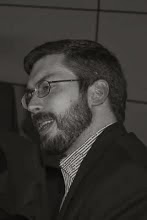
My interview on the public radio show With Good Reason is up. Host Sarah McConnell and Associate Producer Kelley Libby did a great job helping me to talk about my book and the experiences of Confederate veterans after the Civil War.
Be sure to check out the Companion Feature at the bottom as well.
Friday, August 19, 2011


Monday, June 27, 2011
A Professor's Legacy

Dick Warner spent 36 years at Mary Washington, teaching classes in Russian, French, and maritime history. When I first came to the school as a prospective student he was the one who spent nearly 90 minutes talking to me about the school and the history major. This was in stark contrast to the other schools I had visited at which I was lucky to get even five minutes with any faculty members; I don't know if he ever realized it, but he was a big reason that I came to (then) Mary Washington College. [Over a decade later, when I applied after graduate school for a tenure-track teaching position in the department, Dick told me that he would only support hiring me if I agreed to become chair someday.... Something tells me he's still got a smile and a twinkle in his eye about that one.]
Although a dedicated teacher, his real passion was men's rugby. He was instrumental in starting the club sport at MWC in the 1980s and was, as one of the participants this weekend noted, the "Godfather of Mary Washington Rugby". He advocated for resources with the administration and raised money from a wide variety of sources. He recruited constantly, boldly poaching athletes from more mainstream sports at the school. He attended almost every match for decades and continued to come to many games, even after his retirement and move out of state in 2004.
I knew most of this before this weekend. Frankly, you couldn't be Dick's colleague (or student) without getting a major rugby update at least once a week. But this weekend's memorial service was a powerful sign of Dick Warner's impact, of a remarkable legacy. At the service, on the rugby pitch that really should be named Doc Warner Field, nearly 100 people remembered his life and his impact on them. As we went around the large circle, we heard from alumni from the classes of the 1980s to 2011, from people who had traveled thousands of miles or just a few blocks, from teary middle-age men to proud recent graduates, all to pay tribute to Dick.
But the tales that were told of Doc Warner this weekend went beyond that of solely a sport. Of course there were stories of recruiting phone calls and of conversations about various aspects of a student's rugby game, of the enduring passion and love Dick had for the sport and its players. But even more powerful were those stories of Dick mentoring students about their classes, working out structured schedules with young men who were having trouble adjusting to the rigorous demands of Mary Washington's courses, introducing them not only to the library, but to the specific cubicle in which they would henceforth be studying. Several alums spoke to the fact that, rather than being easier on rugby players in his own classes, that he expected more of them. And that attention to their success as students and as men didn't stop with their graduation. We heard of countless recommendation letters written, or phone calls to potential employers; we heard of the community of people (students, alumni, parents, friends) bound together ostensibly by rugby, but really by Doc Warner's unrelenting energy and interest; we heard about Dick recognizing former students on the street decades later and remembering key details about their lives. We heard from Dick's own family about the importance of "his second family" to Dick, of his pride in them and in their successes. We heard about his generosity, his quiet support of students in financial straits, and his wry sense of humor.
I was talking with other faculty members at the end of the memorial, wondering at the powerful impact Dick had had on these student-athletes. Few faculty have the kind of impact, inspire the kind of devotion, leave the kind of legacy that he did. Many of us who teach would be thrilled to have a memorial service to which so many of those we advised and taught came, where there was as much joy and laughter as there were tears and sadness, a sense of a life well and fully lived for both family and work. It was a fitting tribute to Richard Warner's career and life.
Wednesday, July 07, 2010
Thinking about Public History Projects: A DIY history toolkit
My good friend, Leslie, begins a new tenure-track job this fall in Idaho. She recently asked for input on her next big project. If you haven't read the post yet, you should. The gist is as follows:
My response in her comments included two ideas, which, you'll notice, don't really answer her question. They do, however, raise a couple of ideas about ways to approach her rethinking of public history's goals:
The more I think about it, the more I really like the second notion, the DIY history toolkit. Think about the value of such a guide/checklist/resource. What would you include in a DIT history toolkit?
Good luck to Leslie with her move, her new job, and her new projects. Head on over and help her out.
Whereas public historians traditionally have done history for the public--e.g. in museum exhibits or in documentary films--there's a small but growing group of public historians who want to foster and study history done by the public, by passionate amateurs and average folks instead of created for them. I'm one of those historians, and as I transition to life on the tenure track (I'll have 4-5 years to prove I deserve to be employed for the next 30-35 years), I'm searching for a project or two in which I can make significant progress in 3-4 years.
I'm hoping you can help me by telling me a bit about how you use history in your life, either everyday or on special occasions. I want to find a project that not only interests me, but that really gets people excited about engaging with the history of their family, neighborhood, house, community, hobby, or whatever else they're passionate about.
My response in her comments included two ideas, which, you'll notice, don't really answer her question. They do, however, raise a couple of ideas about ways to approach her rethinking of public history's goals:
1) Create a centralized set of resources on a topic. I'm thinking of collecting links to web-based resources, but they might just be lists of various sources/works for the topic. Gathering those together in and of themselves could prove valuable to a group that has not done that yet for its own history and would allow you to bring the experiences of a public historian to help as well.
2) Create a resource that would provide access to tools, methodologies, approaches that would help people engage in their own group/family history. This would be a kind of DIY family/group history kit. You might include advice on how to do interviews; how to scan images and documents for historical purposes; discuss using WP or other blogging software (or software like Omeka) to create exhibits; how to use wikis to create crowdsourced projects like the Davis Wiki; examples of other sites (and ones that inspire a sense of possibility, not major, grant-funded institutional projects); how to fact check family/group stories (or why those stories are valuable regardless of their validity), etc.
Here I'm thinking of initially virtual tools. But with an outside grant or support from your institution, you and your new department might become known for lending the equipment (cameras, audio recorders, scanners, etc.) and expertise needed to empower people in your area to do their own individual or group history projects.
The more I think about it, the more I really like the second notion, the DIY history toolkit. Think about the value of such a guide/checklist/resource. What would you include in a DIT history toolkit?
Good luck to Leslie with her move, her new job, and her new projects. Head on over and help her out.
Wednesday, June 16, 2010
Banner Lecture for VHS
I was truly honored when the Virginia Historical Society, a wonderful museum and archive, asked me to give one of the famous Banner Lectures on my book. Oddly enough, though I've presented various parts at a number of conferences, I've never done a formal presentation of the whole project. So, I had a good time putting this talk together and it turned out pretty well. I got some great questions from the audience.
Thanks again to Nelson Lankford, Frances Pollard, and the rest of the VHS staff for all the work that they do to contribute to the history of Virginia.

Thanks again to Nelson Lankford, Frances Pollard, and the rest of the VHS staff for all the work that they do to contribute to the history of Virginia.
Tuesday, April 06, 2010
Lecture: Teaching and Learning with New Media
I've not posted on this blog in a while (see ProfHacker.com and http://mcclurken.org/ for other goings on).
However, I was honored to be asked to give one of the inaugural lectures in the Teaching Excellence series begun this year by UMW's Center for Advancing Teaching and Learning.
What follows is the video and a list of the links mentioned in the talk.
Thanks to all for the opportunity and the questions. Let me know in the comments if you have any questions.
What is New Media? My Goals in using New Media tools Examples of Classroom Use Assessing the Impact What Can You Do? Blogging – Teresa Coffman (EDUC) and Steve Greenlaw (ECON) Blog as course management tool — Sue Fernsebner’s Freshman Seminar: Toys as History As site for collecting hard-to-find research sources for students –Steve Harris’s Hist 485: Researching Russian and Soviet Resources Wiki for discussions in all my courses Blogs as Individual/Group Reflections Blogs as Research Logs (Historical Methods/Digital History) Examples of Individual digital projects — US History in Film Class Museum of history of technology projects (http://historyoftech.umwblogs.org/) See also Krystyn Moon’s 19th-Century Museum – http://amst312.umwblogs.org/
However, I was honored to be asked to give one of the inaugural lectures in the Teaching Excellence series begun this year by UMW's Center for Advancing Teaching and Learning.
What follows is the video and a list of the links mentioned in the talk.
Thanks to all for the opportunity and the questions. Let me know in the comments if you have any questions.
Overview
What is New Media? – http://en.wikipedia.org/wiki/New_media
UMWBlogs
UMWers & New Media
- Skype
- Digital Storytelling – Jim Groom’s course
- Audio from the past– Marie McCallister’s 18th-Century Audio Blog
- Digital Games – Zach Whalen’s site with links to courses
- TEDTalks – For a class based on TEDTalks, see this FSEM I co-taught with Tim O’Donnell
- How-To Videos
- See UMW library ShowMe videos
- See Academic Services videos
- Zotero – See History & American Studies Department Zotero group library
- YouTube
Low Levels of Technology Use
- Veterans FSEM – http://rwelker.umwblogs.org/2008/10/
- TEDTalks FSEM – http://ted2009.umwblogs.org/
- Topic Discussion — http://eweaver.umwblogs.org/2007/09/06/my-topic/
- Research Problems — http://amandashumaker.umwblogs.org/2007/10/22/frustration/
- Lessons Learned and Shared — http://megamcdh2010.umwblogs.org/2010/03/16/week-9/
More Intensive Uses of New Media Tools
Adventures in Digital history course
Digital Toolkit
- 2008 Class & Projects – http://digitalhistory.umwblogs.org
- – Historical Markers Project (HMP) — [6]
- – James Farmer Project (JFP) — [7]
- – James Monroe Papers Project (JMPP) — [8] and [9]
- – Alumni Project (AP) — [10]
Adventures in Digital History 2010 — http://dh2010.umwblogs.org
- UMW Images Project
- Life and Legacy of Mary Ball Washington
- James Monroe’s Letters as Minister to France
- City of Hospitals: Fredericksburg in the Civil War
Student Impact Survey — From November 2009 — Contact me directly for details
Wednesday, August 19, 2009
A new blog, but with people who actually post
This week I was flattered to join the cast of bloggers at Prof. Hacker, a site that focuses on productivity, technology, and teaching. My first post was on Deploying Students as Tech Mentors. I hope I can keep up with the productive group of people assembled there....
Sunday, July 12, 2009
I've started another blog
New blog and new blog post on me "building" stuff. You've been warned.
[The new blog will not be posted to often (due to time constraints on the projects, not on the blogging). Blogging will resume in this space in the near future.]
[The new blog will not be posted to often (due to time constraints on the projects, not on the blogging). Blogging will resume in this space in the near future.]
Subscribe to:
Posts (Atom)